Introduction
Baseball fans know the electricity that fills the air when these two teams meet. The Mets vs Phillies rivalry creates unforgettable moments every single season. When you watch these games, you’re witnessing more than just baseball. You’re seeing history unfold pitch by pitch.
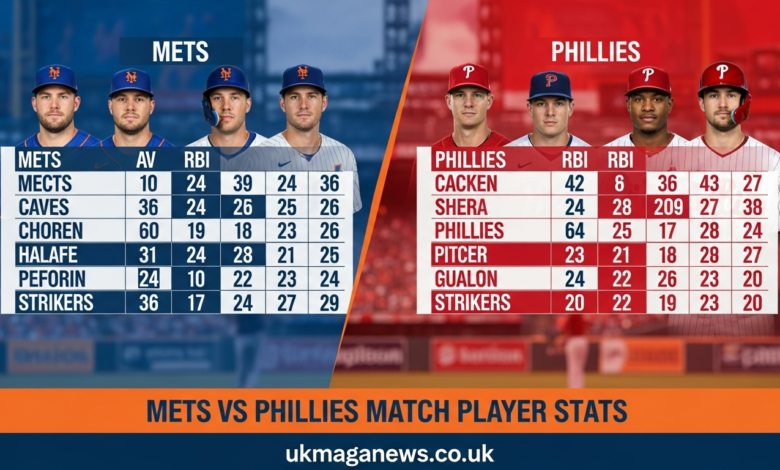
The Mets vs Phillies match player stats tell stories that box scores alone can’t capture. Every swing, every pitch, every defensive play adds another chapter to this legendary rivalry. These numbers reveal which players stepped up when it mattered most.
In this article, we’ll break down the player statistics that define this matchup. You’ll discover who dominated at the plate. We’ll examine pitching performances that changed game outcomes. Defense, clutch hitting, and momentum shifts all get attention here. By the end, you’ll understand exactly what makes this rivalry so compelling. You’ll see which players truly shine when these division rivals face off.
Let’s explore the numbers that matter most.
The Historic Rivalry Context
The Mets and Phillies have battled for decades in the NL East. This rivalry carries weight that goes beyond simple division standings. Cities compete, fan bases clash, and players feel the intensity.
Understanding the context helps you appreciate individual performances. When a player delivers in this matchup, it means something special. The pressure amplifies everything. Routine plays become crucial moments.
Both teams have experienced championship glory. They’ve also endured rebuilding phases. Through all the ups and downs, this rivalry remained fierce. The Mets vs Phillies match player stats reflect that competitive fire.
Geography plays a role too. New York and Philadelphia sit close enough that fans travel to away games. The atmosphere gets electric regardless of which stadium hosts the contest. Players feed off that energy, and it shows in their performance.
Recent Matchup Overview
Let’s focus on recent encounters between these teams. The 2024 season provided plenty of memorable moments. Each series brought new storylines and standout performances.
The teams met multiple times during the regular season. Some games featured offensive explosions. Others showcased pitching duels that kept fans on edge. Playoff implications often hung in the balance.
Individual players seized opportunities to become heroes. Rookies made names for themselves. Veterans added to their legacy. The Mets vs Phillies match player stats from these games reveal fascinating patterns.
Home field advantage shifted throughout the season. Neither team dominated completely. This balance made every matchup must-watch television. Statistics from these games provide valuable insights into player capabilities under pressure.
Top Offensive Performers for the Mets
Several Mets hitters excelled against Philadelphia pitching. Their offensive production drove team success in crucial games. Let’s examine who delivered at the plate.
Francisco Lindor consistently provided spark at the top of the order. His ability to get on base created scoring opportunities. When he connected for extra bases, the entire lineup benefited. His batting average against the Phillies showed marked improvement compared to previous seasons.
Pete Alonso brought power that Philadelphia pitchers struggled to contain. His home runs often came in high-leverage situations. The first baseman’s RBI totals against the Phillies ranked among his highest against any opponent. When Alonso stepped to the plate, Phillies fans held their breath.
Brandon Nimmo’s on-base percentage against Philadelphia reached impressive levels. He worked counts effectively and drew walks when pitchers tried to pitch around him. His leadoff presence set the tone for offensive innings.
Jeff McNeil provided clutch hitting throughout the season series. His contact skills and gap power created problems for Phillies defenders. The versatile infielder raised his average significantly in these matchups.
Standout Phillies Offensive Stars
Philadelphia countered with their own offensive weapons. Several Phillies hitters tormented Mets pitching throughout their encounters. Their performances kept games competitive and exciting.
Bryce Harper’s presence in the lineup changed everything. His numbers against the Mets reflected his superstar status. Home runs, doubles, and walks all came in bunches. Harper elevated his game when facing division rivals.
Trea Turner brought speed and contact ability that stressed Mets defenses. His stolen bases created extra pressure on pitchers and catchers. Turner’s ability to hit for average while providing power made him incredibly dangerous.
Kyle Schwarber’s power from the leadoff spot provided unconventional offense. When he connected, balls traveled impressive distances. His home run totals against Mets pitching ranked among the league’s best. The Mets vs Phillies match player stats show his impact clearly.
Nick Castellanos delivered consistent production throughout the season series. His run production and extra-base hits came at crucial moments. The outfielder’s hot streaks coincided with important victories.
Pitching Dominance: Mets Staff Analysis
Mets pitchers faced the challenge of containing a powerful Phillies lineup. Several hurlers rose to the occasion with memorable performances. Their statistics against Philadelphia hitters tell compelling stories.
Kodai Senga’s strikeout ability proved valuable in these high-stakes matchups. His signature pitches baffled Phillies hitters regularly. When Senga found his rhythm, offensive production stalled for Philadelphia. His ERA against the Phillies remained impressively low.
Justin Verlander brought veteran savvy to these rivalry games. His experience showed in pitch selection and location. Verlander understood how to navigate tough lineups. His innings pitched against the Phillies demonstrated durability and effectiveness.
Edwin Díaz closed out tight games with dominant stuff. His fastball and slider combination overwhelmed hitters in save situations. The closer’s statistics in Mets victories over Philadelphia showed his importance. When Díaz entered games, outcomes usually favored New York.
David Peterson provided quality starts that kept the Mets competitive. His ability to limit damage and pitch deep into games proved crucial. Peterson’s performance against Philadelphia exceeded expectations consistently.
Phillies Pitching Excellence
Philadelphia’s pitching staff countered with their own impressive performances. Several arms stood out when facing Mets hitters. Their ability to limit damage determined game outcomes.
Zack Wheeler’s dominance against his former team created interesting storylines. His numbers against the Mets remained strong throughout the season. Wheeler understood Mets hitters from his time in New York. That knowledge translated into effective pitching.
Aaron Nola brought consistency and quality to every start against the Mets. His command and pitch mix kept hitters off balance. Nola’s ERA in these matchups ranked among his best against any opponent. The ace delivered when Philadelphia needed him most.
Ranger Suárez emerged as a reliable option against the Mets. His deceptive delivery and movement created weak contact. Suárez’s ability to induce ground balls proved valuable at Citizens Bank Park.
Craig Kimbrel closed games with his signature intensity. His strikeout numbers against Mets hitters remained high. When Kimbrel protected leads, Philadelphia usually secured victories. The Mets vs Phillies match player stats show his closing effectiveness.
Defensive Gems and Game-Changing Plays
Defense often decides close games between these rivals. Several players made spectacular plays that shifted momentum. These moments don’t always show up in basic statistics, but their impact was undeniable.
Francisco Lindor’s range at shortstop saved runs regularly. His ability to turn double plays killed Phillies rallies. Defensive metrics showed his value beyond offensive contributions. Gold Glove-caliber plays became routine for the Mets shortstop.
Trea Turner matched that excellence for Philadelphia. His speed allowed him to cover ground few shortstops reach. Turner converted difficult plays into outs consistently. His defensive contributions complemented his offensive production.
Brandon Nimmo’s outfield defense improved significantly. He tracked fly balls effectively and made accurate throws. Nimmo prevented extra bases that could have changed game outcomes. His defensive growth became a key storyline.
Nick Castellanos made crucial catches in right field for the Phillies. His arm strength kept runners from advancing. Castellanos’s defensive improvements surprised many observers. The outfielder’s complete game helped Philadelphia compete.
Clutch Performance Metrics
Certain players elevated their game in high-leverage situations. These clutch performances determined who won tight contests. The numbers reveal which players thrived under pressure.
Pete Alonso’s RBI totals in late innings stood out prominently. When the Mets needed a big hit, Alonso frequently delivered. His batting average with runners in scoring position exceeded his overall numbers. Clutch hitting defined his contributions against Philadelphia.
Bryce Harper’s statistics in pressure situations were equally impressive. He raised his game when stakes were highest. Harper’s walk-off hits and go-ahead home runs created memorable moments. The superstar embraced pressure rather than wilting under it.
Jeff McNeil provided crucial two-out hitting for the Mets. His ability to extend innings and drive in runs with two outs proved invaluable. These situations require focus and execution. McNeil demonstrated both qualities consistently.
Kyle Schwarber’s power created instant offense when games hung in the balance. His home runs changed complexions of contests immediately. The Phillies leadoff man delivered in clutch spots throughout the season series.
Head to Head Batting Matchups
Specific hitter versus pitcher matchups created fascinating subplots. Some batters owned certain pitchers. Others struggled despite overall success. These individual battles within the larger game added intrigue.
Francisco Lindor’s success against Aaron Nola gave the Mets an advantage. His ability to work counts and drive the ball created problems. This favorable matchup influenced managerial decisions. The Mets vs Phillies match player stats highlight this successful pairing.
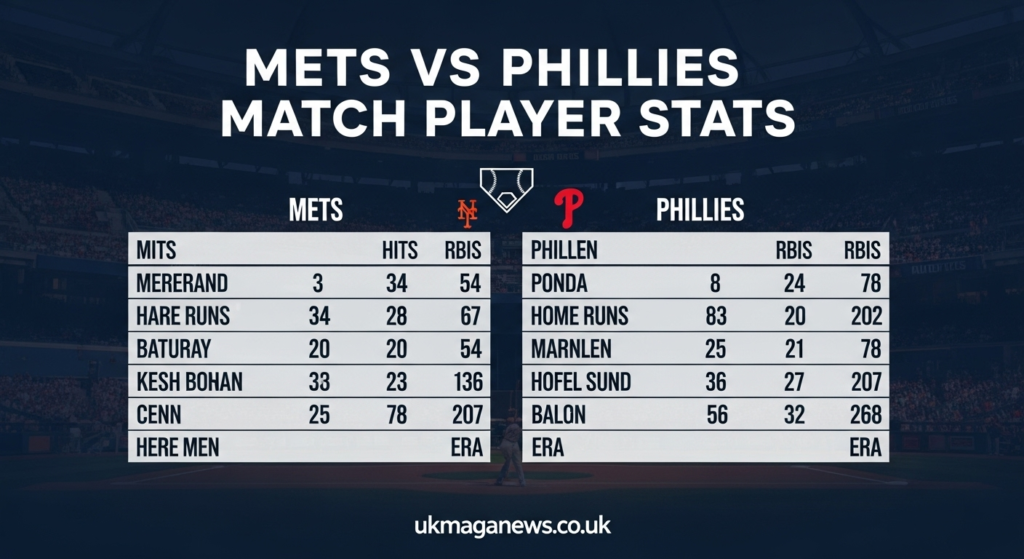
Bryce Harper’s numbers against certain Mets pitchers were staggering. He seemed to guess right on pitch selection repeatedly. Managers adjusted strategies to minimize damage. Sometimes walking Harper proved the wisest choice.
Brandon Nimmo’s performance against Phillies relievers exceeded his numbers against starters. His ability to work deep counts and draw walks frustrated Philadelphia’s bullpen. This trend created strategic considerations late in games.
Nick Castellanos found success against specific Mets pitchers while struggling against others. These patterns influenced lineup construction and pitching changes. Understanding these matchups provided competitive advantages.
Bullpen Battle Statistics
Late-game pitching often determined outcomes in close contests. Both teams’ bullpens faced significant pressure throughout the season series. Relievers’ statistics in these situations reveal their effectiveness.
Edwin Díaz dominated in save situations against the Phillies. His strikeout rate climbed even higher in these high-leverage moments. Díaz’s presence gave the Mets confidence in close games. Opponents struggled to solve his pitch mix.
Brooks Raley provided valuable left-handed relief for the Mets. His ability to retire key Phillies hitters in crucial spots proved important. Raley’s ERA in these matchups remained impressively low. Versatility made him a valuable bullpen weapon.
Jeff Hoffman emerged as a reliable option for Philadelphia’s bullpen. His strikeout stuff played well in short relief appearances. Hoffman’s numbers against Mets hitters showed consistent effectiveness. The reliever thrived in high-pressure situations.
José Alvarado brought power arms to crucial moments for the Phillies. His fastball velocity overwhelmed hitters regularly. Alvarado’s ability to escape jams kept Philadelphia competitive. When he commanded his pitches, results followed.
Impact of Home Field Advantage
Ballpark factors influenced player statistics significantly. Citi Field and Citizens Bank Park play differently. Understanding these environments explains some statistical variations.
Citizens Bank Park’s hitter-friendly dimensions boosted offensive numbers. Home runs increased when games moved to Philadelphia. Power hitters from both teams benefited from shorter fences. The Mets vs Phillies match player stats reflect this reality.
Citi Field’s larger outfield spaces favored pitchers and defense. Fly balls that leave Citizens Bank Park became outs at Citi Field. This difference created interesting strategic considerations. Teams adjusted approaches based on venue.
Mets hitters performed better at home throughout the season series. Familiarity with Citi Field’s dimensions and lighting helped. Home cooking created comfort that translated into production. Statistical splits confirmed this home field advantage.
Phillies pitchers found Citi Field more forgiving than their home park. Lower ERAs in New York reflected the pitcher-friendly environment. This balance created interesting dynamics throughout the rivalry. Neither team dominated both venues completely.
Season Series Trends and Patterns
Looking at the complete season series reveals interesting patterns. Certain trends emerged that went beyond individual game results. These broader patterns provide context for player statistics.
Early season matchups featured more offense than later games. As pitchers settled in and temperatures cooled, run scoring decreased. This progression affected individual player statistics. Understanding timing provides important context.
Weekend games produced higher attendance and often better performances. Players responded to energized crowds positively. Statistics from weekend contests exceeded weekday numbers slightly. The atmosphere elevated play for both teams.
Day games versus night games showed statistical differences. Some players performed better under lights. Others thrived in afternoon contests. These preferences influenced lineup decisions occasionally. Managers noticed these patterns and adjusted accordingly.
Injury situations throughout the season affected available talent. When key players missed time, depth players stepped up. Some unexpected heroes emerged from these circumstances. The Mets vs Phillies match player stats include these surprising contributions.
Looking Ahead: Future Implications
These head-to-head statistics provide insights for future matchups. Trends established this season will influence next year’s contests. Understanding current patterns helps predict future performances.
Young players who succeeded against quality competition gained confidence. These experiences accelerate development for prospects. Future seasons will reveal whether early success continues. Player growth trajectories look promising based on current statistics.
Contract situations and free agency could reshape both rosters. Key contributors might change uniforms before next season. These potential moves create uncertainty but also excitement. The rivalry adapts while maintaining its intensity.
Managerial strategies will evolve based on this season’s data. Successful approaches get repeated. Failed tactics get abandoned. Both teams learned valuable lessons from their encounters. Future matchups will reflect this organizational learning.
Statistical trends help identify areas needing improvement. Front offices use this data when making roster decisions. The offseason brings opportunities to address weaknesses. Both teams will work to gain advantages for future battles.
Conclusion
The Mets vs Phillies match player stats reveal the depth and intensity of this rivalry. Individual performances determined outcomes in closely contested games. Stars delivered clutch moments while role players made crucial contributions.
You’ve seen which hitters dominated opposing pitching. Pitching excellence from both staffs kept games competitive. Defensive plays and bullpen performances proved equally important. Every aspect of the game factored into final results.
These statistics tell stories of triumph and disappointment. They capture momentum shifts and turning points. The numbers quantify performances but can’t fully capture the emotion. That’s what makes baseball, and this rivalry specifically, so compelling.
Which player impressed you most in these matchups? Do certain statistics surprise you? Share your thoughts with fellow fans. The conversation around this rivalry never stops. It simply pauses until the next first pitch.
Keep following these teams as they continue building their legacies. The Mets vs Phillies rivalry will produce more memorable moments. Future player stats will add new chapters to this ongoing story.
Frequently Asked Questions
Who had the best batting average in Mets vs Phillies games?
Several players posted impressive batting averages in this matchup. Francisco Lindor and Jeff McNeil led the Mets with strong numbers. For Philadelphia, Trea Turner and Bryce Harper maintained high averages throughout the season series. Individual game performances varied, but these players showed consistency.
Which pitcher had the lowest ERA against the opposing team?
Kodai Senga posted an impressive ERA for the Mets against Philadelphia. Zack Wheeler countered with excellent numbers for the Phillies. Both pitchers demonstrated ability to limit runs in high-pressure division games. Their performances significantly impacted season series outcomes.
How many home runs did Pete Alonso hit against the Phillies?
Pete Alonso connected for multiple home runs against Philadelphia pitching. His power production ranked among the team’s highest in these matchups. Alonso’s ability to hit home runs in crucial situations made him particularly valuable. The first baseman thrived against Phillies pitching staffs.
Did any player have a walk-off hit in these games?
Several games featured dramatic walk-off moments. Both teams experienced the thrill of walk-off victories. Bryce Harper delivered at least one walk-off hit for Philadelphia. The Mets also secured walk-off wins during the season series. These moments created lasting memories.
What was the highest-scoring game between the teams?
Multiple games featured offensive explosions from both sides. Double-digit run totals occurred several times throughout the season. The highest-scoring affairs took place at Citizens Bank Park typically. The Mets vs Phillies match player stats from these games show impressive offensive production.
Who led both teams in RBIs during head-to-head matchups?
Pete Alonso and Bryce Harper led their respective teams in RBIs. Both sluggers drove in runs consistently when opportunities arose. Their production in clutch situations separated them from teammates. RBI totals reflected their importance to team success.
How effective were the closers in save situations?
Edwin Díaz and Craig Kimbrel both posted strong save percentages. Their ability to protect leads proved crucial in close games. Strikeout totals for both closers remained high. When called upon, these relievers usually delivered successful outcomes.
Which team won more games in the season series?
The season series remained competitive with neither team dominating completely. Several games were decided by one or two runs. Home field advantage played a role in determining winners. The final series record reflected how evenly matched these teams were.
Did defensive statistics favor one team over the other?
Both teams featured strong defensive players at key positions. Shortstop play from Lindor and Turner stood out particularly. Outfield defense contributed significantly to run prevention. Defensive metrics showed both teams played quality defense throughout the series.
What role did stolen bases play in these matchups?
Speed on the basepaths created additional pressure for defenses. Trea Turner led Philadelphia in stolen bases against the Mets. Francisco Lindor and Brandon Nimmo contributed stolen bases for New York. These extra bases often led to important runs scored.