Introduction
You’re settled into your seat, ready for takeoff. The engines roar to life. Everything seems normal until the pilot’s voice crackles over the intercom with words no passenger wants to hear: “We’re experiencing a technical issue and need to return to the airport.”
That moment of uncertainty hits hard. Your heart races. Questions flood your mind. United Airlines flight emergency landing situations happen more often than you might think, though they rarely make headlines unless something truly dramatic occurs.
Understanding what triggers these emergency responses can ease your anxiety the next time you fly. Modern aviation has refined emergency procedures to protect you at every step. Pilots train extensively for these scenarios. Flight attendants know exactly what to do. The aircraft itself contains multiple backup systems designed to handle failures.
This article walks you through everything you need to know about United Airlines emergency landings, from the most common causes to what you should expect if you ever experience one yourself.
What Qualifies as an Emergency Landing
Not every unplanned return to the airport counts as an emergency. Airlines distinguish between different levels of urgency.
A precautionary landing happens when something unusual occurs but doesn’t pose immediate danger. Maybe a warning light illuminates in the cockpit. Perhaps a passenger needs urgent medical attention. The pilot decides to land early out of caution rather than necessity.
An actual emergency landing involves serious threats to the aircraft or passengers. Engine failures qualify. Severe depressurization requires immediate action. Major system malfunctions demand priority handling from air traffic control.
United Airlines pilots follow strict protocols when declaring emergencies. They communicate with controllers using specific terminology. “Pan-pan” signals urgency. “Mayday” indicates life-threatening situations requiring immediate assistance.
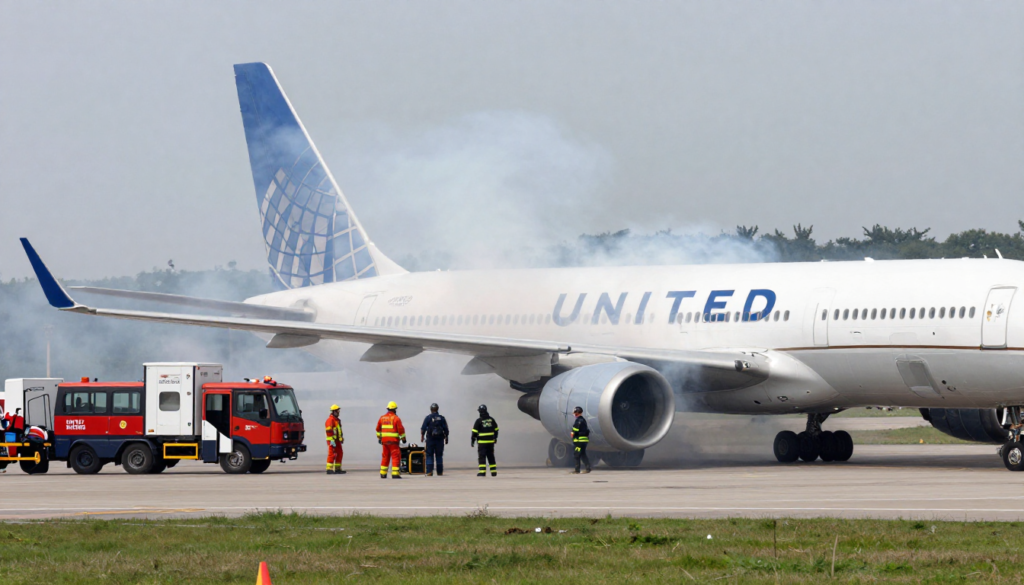
The distinction matters because it determines how airports respond. Emergency vehicles position themselves near runways. Medical teams stand ready. Other aircraft clear the airspace to give the troubled plane priority.
Common Causes Behind United Airlines Flight Emergency Landing Events
Multiple factors can force a United Airlines flight emergency landing. Understanding these causes reveals how seriously the airline treats safety.
Mechanical and Technical Issues
Engine problems top the list of mechanical emergencies. Modern jets can fly safely on one engine, but pilots won’t take chances. Bird strikes damage engines regularly, especially during takeoff and landing. When an engine fails or shows abnormal readings, crews initiate emergency procedures immediately.
Hydraulic system failures create serious concerns. These systems control critical flight surfaces like flaps, rudders, and landing gear. Losing hydraulic pressure means losing precise control over the aircraft. Pilots train extensively for these scenarios in simulators.
Landing gear malfunctions generate dramatic emergency responses. You might see footage of planes landing with gear partially extended or completely retracted. United crews follow detailed checklists to troubleshoot these problems before attempting landing.
Medical Emergencies Onboard
Passenger medical emergencies force many unscheduled landings. Heart attacks, strokes, severe allergic reactions, and complicated pregnancies require immediate ground-based medical care.
Flight attendants receive comprehensive medical training. They can administer oxygen, use automated external defibrillators, and provide basic first aid. When situations exceed their capabilities, pilots divert to the nearest suitable airport.
United Airlines equips aircraft with enhanced medical kits. These contain medications and equipment beyond basic first aid supplies. Doctors or nurses traveling as passengers often volunteer assistance during medical emergencies.
Weather-Related Diversions
Severe turbulence can damage aircraft and injure passengers. When pilots encounter unexpectedly violent air, they might land early to inspect for structural damage and check passenger welfare.
Lightning strikes sound terrifying but rarely cause serious problems. Aircraft design channels electrical current safely through the fuselage. However, pilots sometimes land to verify all systems function correctly after a strike.
Wind shear near airports creates dangerous landing conditions. These sudden wind changes can push aircraft off their approach path. Pilots abort landings and divert to airports with better conditions rather than risk dangerous approaches.
How United Airlines Pilots Handle Emergency Situations
Training makes the difference between panic and professional response. United Airlines invests heavily in pilot preparation for emergencies.
Every six months, pilots complete simulator sessions focusing on emergency procedures. These simulators replicate engine failures, system malfunctions, and extreme weather with stunning realism. Pilots practice until their responses become automatic.
When actual emergencies occur, crews follow established protocols. The pilot flying maintains aircraft control while the pilot monitoring handles communications and checklists. This division of duties prevents confusion during high-stress moments.
Communication happens on multiple levels simultaneously. Pilots coordinate with air traffic control, brief flight attendants about the situation, and keep passengers informed without causing panic. They balance transparency with reassurance.
United’s flight operations center monitors every aircraft in real time. When crews declare emergencies, ground-based experts provide additional support. Engineers review technical data. Meteorologists analyze weather patterns. This team approach ensures pilots have maximum information for decision-making.
What Passengers Experience During a United Airlines Flight Emergency Landing
Your experience during an emergency landing depends on the severity and nature of the problem. Some situations unfold calmly while others feel intense.
You’ll notice increased activity from flight attendants first. They move through the cabin with purpose, securing loose items and checking overhead bins. Their demeanor shifts from service-focused to safety-focused.
The pilot’s announcement provides crucial information. Listen carefully to their instructions. They’ll explain the situation honestly without unnecessary alarm. They’ll tell you estimated time until landing and any special procedures you need to follow.
Preparation for landing intensifies as you approach the airport. Flight attendants demonstrate brace positions. They shout commands to maintain alertness. This might feel scary, but these procedures protect you during potentially rough touchdowns.
The landing itself might feel normal or surprisingly hard. Pilots sometimes land faster or with less finesse during emergencies to ensure they reach the runway safely. You might hear unusually loud braking or feel stronger deceleration.
Emergency vehicles often line the runway when you land. Seeing fire trucks and ambulances through your window confirms the seriousness of the situation. These crews stand ready to respond instantly if needed.
Recent United Airlines Flight Emergency Landing Incidents
Examining recent cases helps you understand how these situations typically unfold and resolve.
Denver Engine Failure
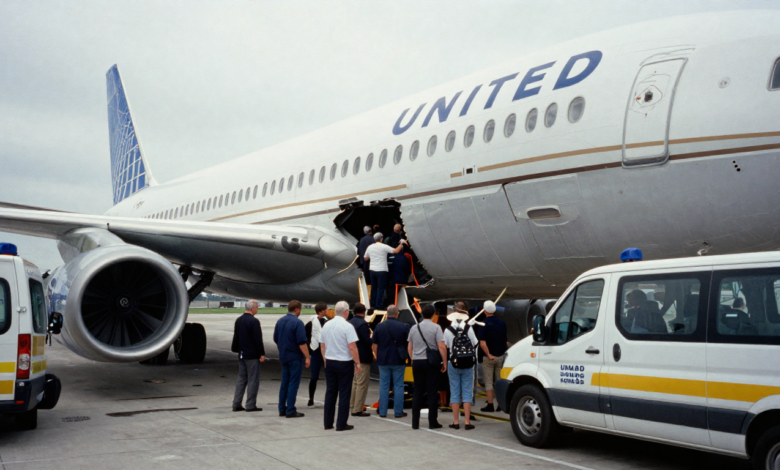
In February 2021, United Flight 328 experienced a catastrophic engine failure shortly after departing Denver. Passengers watched in horror as the engine’s cowling separated and fell away. Debris rained down on a suburban neighborhood below.
The pilots maintained complete control despite losing the right engine. They returned to Denver and landed safely. All 231 passengers and crew walked away without injuries. The incident highlighted how effectively modern aircraft handle even severe failures.
Newark Hydraulic Issues
A United flight bound for London returned to Newark in 2023 after crews detected hydraulic system problems. The landing occurred without incident. Passengers transferred to another aircraft and continued their journey with minimal delay.
This incident exemplifies precautionary landings. The problem wasn’t immediately dangerous, but continuing overseas would have left fewer options for resolution. The pilots chose the conservative approach.
Houston Medical Diversion
A United international flight diverted to Houston in 2024 when a passenger suffered a suspected heart attack. Paramedics met the aircraft at the gate. The passenger received immediate medical attention while other passengers waited briefly before continuing.
Medical diversions happen frequently. Airlines prioritize human life over schedule convenience. These decisions rarely make news but demonstrate the system’s responsiveness to passenger welfare.
Safety Statistics You Should Know
Numbers provide perspective on aviation safety, especially regarding emergency landings.
Commercial aviation remains the safest form of transportation. You face greater risks driving to the airport than flying on United Airlines. The statistics overwhelmingly support this conclusion.
Engine failures occur in approximately one in every 1.5 million flight hours. Modern turbofan engines prove remarkably reliable. Multiple redundancies ensure that single failures rarely escalate into serious problems.
United Airlines operates over 5,000 flights daily. Emergency landings represent a tiny fraction of this total. Most passengers will never experience an emergency landing during their entire lifetime of flying.
When emergencies do occur, survival rates exceed 95%. Modern aircraft design, improved training, and enhanced safety equipment all contribute to these excellent outcomes. You’re in good hands when flying United Airlines.
The airline industry learns from every incident. Investigation teams analyze emergencies to identify improvements. Changes to procedures, maintenance schedules, and training programs emerge from these reviews. Aviation continuously becomes safer.
What Happens After the Emergency Landing
The emergency doesn’t end when wheels touch down. Several important steps follow.
Emergency crews inspect the aircraft immediately. Firefighters check for leaks, hot spots, or damage requiring attention. They ensure the plane is safe before passengers disembark.
Passengers exit through normal doors in most cases. Evacuation slides deploy only when necessary, as they can cause injuries during use. Flight attendants assess the situation and choose the safest exit method.
United Airlines customer service representatives meet passengers in the terminal. They arrange hotel accommodations if needed, book replacement flights, and address immediate concerns. The airline assumes responsibility for getting you to your destination.
Aircraft undergo thorough inspections before returning to service. Mechanics examine every system that might have contributed to the emergency. They repair or replace components as needed. No shortcuts happen with safety.
Regulatory authorities review serious incidents. The National Transportation Safety Board investigates major emergencies. The Federal Aviation Administration monitors airline responses. These oversight bodies ensure proper procedures were followed.
Your Rights as a Passenger During Emergencies
Understanding your rights helps you navigate the aftermath of emergency landings.
United Airlines must provide certain accommodations when flights divert or return unexpectedly. You’re entitled to meals during extended delays. The airline must arrange hotel stays if overnight delays occur.
Compensation rules vary depending on circumstances. Mechanical failures might trigger refund eligibility. Weather-related diversions typically don’t qualify for compensation beyond basic accommodations.
You can file claims for damaged or lost belongings resulting from emergency evacuations. Document everything with photos and detailed descriptions. Keep receipts for any expenses you incur due to the diversion.
Travel insurance can provide additional protection. Policies covering trip interruption often reimburse expenses beyond what airlines provide. Review your coverage before traveling to understand your protection.
European Union regulations offer stronger passenger protections for flights departing EU airports. These rules mandate compensation for delays and cancellations under many circumstances. U.S. regulations focus more on accommodation requirements than financial compensation.
How to Prepare Yourself for Potential Emergencies
Smart preparation reduces anxiety and improves your chances of staying safe during emergencies.
Listen to the safety briefing every flight. Experienced travelers often ignore these demonstrations, but they contain vital information. Note your nearest exits, as they might be behind you. Count the rows between your seat and exits so you can find them in darkness or smoke.
Wear practical clothing when flying. Avoid loose, flowing garments that could catch on obstacles during evacuations. Choose sturdy, closed-toe shoes. Skip the high heels and flip-flops.
Keep important items in your pockets rather than carry-on bags. Your phone, wallet, and passport should stay on your person. You won’t have time to grab bags during evacuations.
Follow crew instructions immediately. Flight attendants train extensively for emergencies. Trust their expertise. Hesitation during critical moments endangers everyone.
Stay calm and help others around you. Your composure can prevent panic from spreading. Offer assistance to children, elderly passengers, or anyone struggling with instructions.
The Technology Behind Safe Emergency Landings
Modern aircraft incorporate sophisticated systems designed specifically for emergencies.
Terrain awareness and warning systems prevent controlled flight into terrain. These systems alert pilots when they’re dangerously close to ground or obstacles. They’ve virtually eliminated this once-common accident cause.
Traffic collision avoidance systems prevent mid-air collisions. When two aircraft get too close, the system automatically issues climb or descent commands. Pilots must follow these instructions immediately.
Enhanced vision systems help pilots see runways during low visibility approaches. Infrared cameras and radar display the environment ahead clearly. These systems enable safer landings in conditions that once grounded aircraft.
Redundant flight control systems ensure pilots retain control even after multiple failures. Modern jets feature three or more independent hydraulic systems. Backup electrical systems power critical instruments. Losing one system still leaves others functioning.
Crashworthy fuel systems prevent post-crash fires. Tanks feature tear-resistant materials and self-sealing capabilities. Fuel lines incorporate automatic shutoff valves that activate during impacts.
How United Airlines Supports Passengers After Incidents
The airline’s responsibility extends well beyond the physical landing.
Crisis response teams activate immediately after significant incidents. These specialists coordinate passenger assistance, family communications, and media relations. They ensure everyone receives appropriate support.
Mental health resources become available to passengers who experience traumatic emergency landings. United partners with counseling services to provide confidential support. Some passengers develop anxiety about flying after frightening experiences.
Compensation packages vary based on circumstances. United typically provides travel vouchers, refunds, or frequent flyer miles to affected passengers. The airline handles claims individually, considering each situation’s specifics.
Equipment replacement programs help when luggage is damaged or lost during evacuations. United processes these claims through their baggage services department. Documentation accelerates the process.
Follow-up communication keeps passengers informed about investigation findings when appropriate. The airline balances transparency with legal and privacy considerations. Major incidents generate detailed reports that become public eventually.
The Future of Emergency Response in Aviation
Technology continues improving how airlines handle emergencies.
Artificial intelligence systems monitor aircraft health in real time. These programs detect subtle anomalies that human observers might miss. Early warning enables proactive maintenance before problems become emergencies.
Improved materials make aircraft lighter and stronger. Composite structures withstand damage better than older aluminum designs. They also resist fatigue cracks that grounded previous aircraft generations.
Enhanced pilot training incorporates virtual reality and artificial intelligence. These tools create more realistic scenarios and adapt difficulty to individual learning curves. Pilots arrive at their first emergency better prepared than ever before.
Better weather prediction systems help pilots avoid dangerous conditions entirely. Satellite data and advanced modeling predict turbulence, storms, and wind shear with increasing accuracy. Prevention beats response.
Next-generation air traffic control systems improve emergency coordination. Digital communications replace voice radio in some situations. Controllers track aircraft with greater precision. These improvements reduce response times during emergencies.
Conclusion
United Airlines flight emergency landing situations test the aviation system’s safety measures. Every incident demonstrates the effectiveness of rigorous training, advanced technology, and comprehensive procedures.
You’re safer in the air than almost anywhere else. Emergency landings, while unsettling, almost always conclude with passengers walking away unharmed. The system works because aviation learns from every event and continuously improves.
Next time you board a United flight, you can feel confident knowing that crews, aircraft, and support systems all stand ready to protect you. Emergency preparedness isn’t about expecting disasters but ensuring you’re ready if they occur.
Have you experienced an emergency landing? Share your story in the comments below. Understanding these events from passenger perspectives helps others prepare emotionally for their own flights.
Frequently Asked Questions
How common are emergency landings on United Airlines flights?
Emergency landings remain rare events. United operates thousands of daily flights with only occasional emergencies. Most passengers never experience an emergency landing during their entire flying lifetime. The airline’s excellent safety record reflects comprehensive maintenance programs and well-trained crews.
What should I do if the pilot announces an emergency?
Stay calm and listen carefully to all instructions from the flight crew. Secure your belongings and prepare for landing as directed. Identify your nearest exit and review the safety card in your seatback pocket. Follow flight attendant commands immediately without hesitation. Your composure helps everyone stay safe.
Will United Airlines compensate passengers after an emergency landing?
Compensation depends on specific circumstances surrounding the emergency. United typically provides accommodations, meals, and rebooking for passengers affected by diversions. You might receive travel vouchers or refunds depending on the situation. File claims promptly with documentation to support your requests.
Can I refuse to continue flying after an emergency landing?
Yes, you can choose not to continue on a replacement flight. United will work with you to arrange alternative transportation or provide refunds based on your circumstances. Nobody forces you to fly if you feel unsafe after experiencing an emergency situation.
How do pilots decide where to make an emergency landing?
Pilots consider multiple factors including severity of the emergency, airport capabilities, weather conditions, and distance. They choose airports with adequate runway length, emergency services, and maintenance facilities. Air traffic controllers assist by providing information about nearby suitable airports.
Are older United Airlines aircraft less safe during emergencies?
Aircraft age matters less than maintenance quality. United maintains all aircraft to strict regulatory standards regardless of age. Older planes undergo more frequent inspections. Modern safety systems are often retrofitted to older aircraft. The airline retires planes when maintenance costs outweigh their value.
What happens to my luggage during an emergency landing?
Your checked luggage typically remains with the aircraft. United transfers it to your replacement flight automatically. During evacuations, you must leave carry-on bags behind. The airline retrieves these items after emergency crews clear the aircraft and returns them to passengers later.
How long does it take to resume flying after an emergency landing?
Timeline varies dramatically based on the emergency’s nature. Minor issues might be resolved in hours. Serious mechanical problems could ground an aircraft for days or weeks. United arranges replacement aircraft to minimize passenger delays while mechanics inspect and repair the original plane.
Do pilots practice emergency landings regularly?
Yes, pilots complete recurrent training every six months in sophisticated simulators. These sessions focus extensively on emergency procedures including engine failures, system malfunctions, and extreme weather scenarios. Pilots must demonstrate proficiency handling emergencies before receiving certification to fly passengers.
What’s the survival rate for emergency landings on commercial flights?
Survival rates for emergency landings exceed 95% in commercial aviation. Modern aircraft design, improved training, and enhanced safety equipment all contribute to these excellent outcomes. Fatal accidents have become exceptionally rare in developed countries with strong aviation oversight.
Also read ukmaganews.co.uk